Before You Sail
Check the Weather
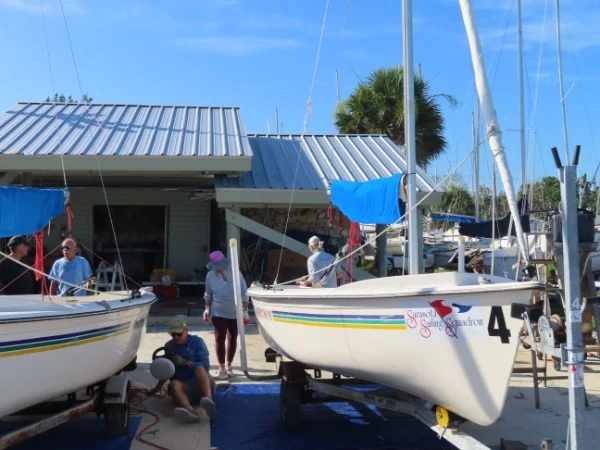
In Southwest Florida, weather models are notoriously fickle; an easterly surge or a Gulf front that looks menacing on Thursday afternoon often stalls, breaks up, or shifts just enough to leave the Bay perfectly sailable by the time Friday afternoon rolls round.
We like to call it from the dock.
Sarasota Bay is a land of microclimates and thermal shifts that no app can perfectly capture. You have to be standing on the squadron dock, ready to launch, watching the actual sea state and seeing if those predicted conditions actually materialized or if the wind has laid down into a sweet spot.
Show up, and make your move based on the conditions hitting your face!
Wind Conditions
Check the wind speed and direction. Ideal sailing conditions usually involve moderate winds. Too much wind can be dangerous, while too little can leave you stranded.
Wave Height and Swell
High waves and swells can make sailing challenging and uncomfortable. Look for forecasts that provide information on wave height and direction.
Weather Forecasts
Use reliable sources for up-to-date information. The Windy website provides a good overview of current Sarasota Bay conditions.
Hat, Water, Sunblock
Absolutely essential, especially when sailing in Sarasota.
Tides and Currents
Understanding the tidal patterns and currents will help you navigate more effectively and avoid potential hazards.
Visibility
Fog and rain can reduce visibility, making navigation difficult. Always check visibility forecasts before setting out.
Storms and Severe Weather
Be aware of any potential storms or severe weather warnings. It’s best to avoid sailing in such conditions.
Dress Appropriately
Be prepared for rain or sudden changes in temperature. See our FAQ for Fleet Friday recommendations.